Animal Weighing Scale Explained: A UK Buyer's Guide
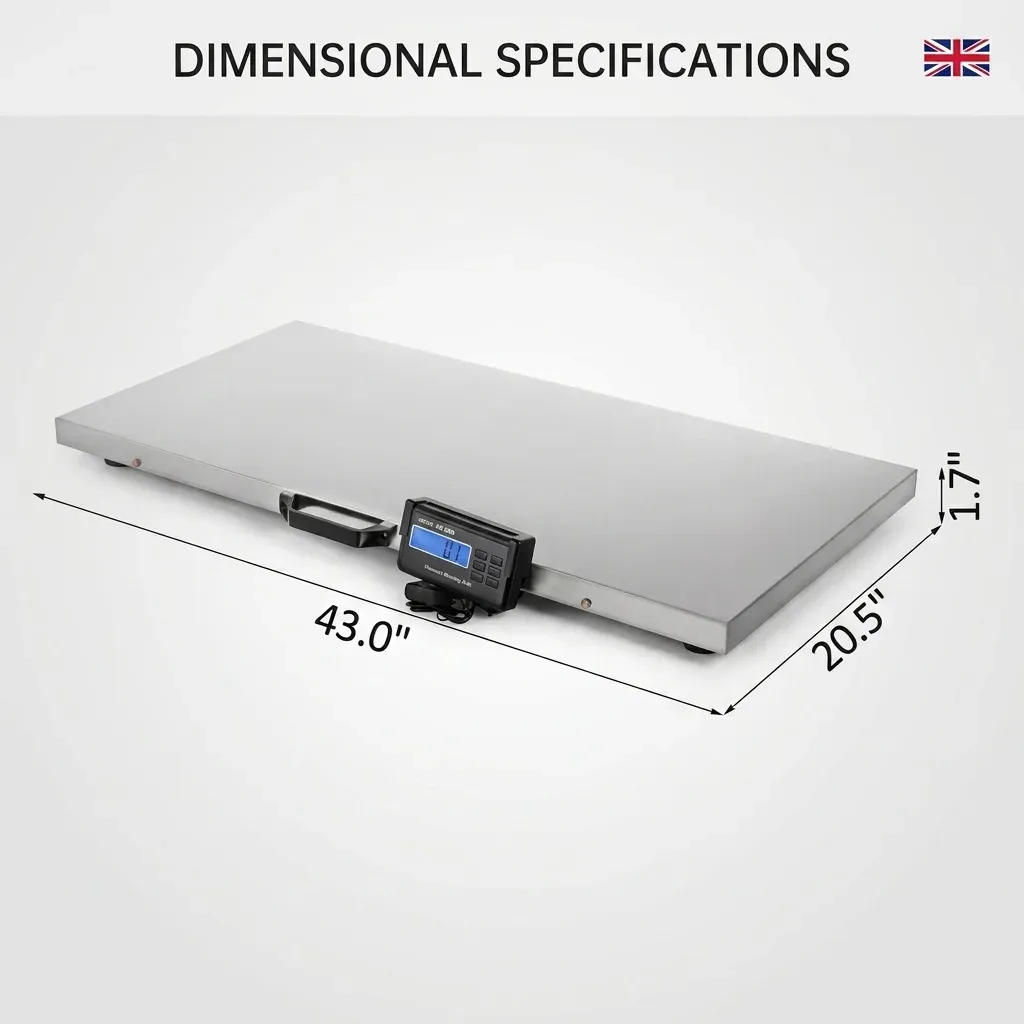
TL;DR: An animal weighing scale is a specialist weighing system used to measure the liveweight of cattle, sheep, pigs, horses and other animals accurately and safely. For most UK buyers, the right choice depends on the species, handling setup, weighing frequency, platform size, load capacity, motion compensation and whether you need a portable or fixed system.
An animal weighing scale is designed to weigh live animals accurately in farms, equine yards and veterinary settings where movement, mud and uneven loading are common. In practice, it helps UK users make better decisions on medicine dosing, feed planning, growth monitoring and handling, while also supporting animal welfare and day-to-day efficiency.
Choosing the right system is not a minor purchasing decision. In farming, equine care, veterinary work and animal welfare, weight data affects feed planning, medicine dosing, transport decisions and breeding management. Therefore, a scale that is inaccurate, awkward to use or poorly matched to your setting can waste time and create avoidable risk.
This guide explains what an animal weighing scale is, how it works, which types suit different animals, and what UK buyers should look for before spending money. If you are comparing options for cattle, sheep, pigs, horses or mixed-use yards, this article will help you buy with confidence.
Key Takeaways
- An animal weighing scale is built to capture accurate liveweight readings safely in demanding environments such as farms, yards and veterinary facilities.
- The right setup depends on species, handling system, weighing frequency, animal movement and whether you need portable or fixed equipment.
- UK buyers should check capacity, platform size, indicator functions, ingress protection, calibration support and trade approval where relevant.
- Accurate weight matters for dosing medicines correctly and managing feed efficiency, growth rates and welfare outcomes.
- A cheap scale can become expensive if it causes repeat weighing, maintenance issues or inaccurate data.
What is an animal weighing scale?
An animal weighing scale is a weighing system built to measure the liveweight of animals safely and reliably. Unlike standard industrial platforms, these systems are designed for movement, uneven loading, dirt, moisture and demanding day-to-day use. They usually combine a robust platform or weigh bars with load cells and a digital indicator that displays the weight.
The main challenge in animal weighing is that livestock rarely stand perfectly still. As a result, good systems compensate for motion and provide stabilised readings quickly enough to keep handling efficient. On a busy farm or in a veterinary environment, that speed matters almost as much as accuracy.
If you want broader context on equipment categories and typical livestock applications, see our ultimate guide to scales for livestock in the UK, which covers the wider landscape in more detail.
Why is accurate animal weighing important?
How does animal weighing affect medicine dosing?
Liveweight is central to correct medicine dosing. Underestimating weight can reduce treatment effectiveness; overestimating it may increase cost and create avoidable welfare concerns. This matters in veterinary practice and on working farms alike. According to UK guidance from the Veterinary Medicines Directorate (VMD), responsible medicine use in food-producing animals is essential, so accurate weight assessment is an important practical step before dosing decisions are made.
How does an animal weighing scale help with feed management?
Weight tracking helps monitor growth performance, finishing targets and feed conversion efficiency. In commercial livestock operations, small errors repeated across a group can distort decision-making around ration changes or sale timing. Therefore, regular weighing creates a clearer picture of performance than visual estimates alone.
Can an animal weighing scale support safer transport and handling?
Yes. For some operations, knowing approximate total liveweight before loading can help with transport planning and stocking management. In addition, weight records support better grouping by size or condition score where appropriate.
Why does accurate weight matter commercially in the UK?
The Agriculture and Horticulture Development Board (AHDB) has reported that feed typically accounts for around 60% of beef production costs on many systems in Great Britain. When feed represents such a large share of cost, accurate weight data becomes commercially useful rather than merely administrative. Source: AHDB beef benchmarking and cost-of-production materials.
How does an animal weighing scale work?
Most animal weighing scales rely on load cells. These are sensors that convert force into an electrical signal. When an animal stands on the platform or over weigh bars fitted beneath a crush or crate, the load cells register that force. The indicator then converts the signal into a weight reading.
The best systems for live animals include software features that reduce the effect of shifting movement. This may be described as dynamic weighing or motion compensation. In practical terms, it means the display settles on a usable figure even when the animal is not perfectly still.
What are the main parts of an animal weighing scale?
- Platform or weigh bars: The physical structure supporting the animal or existing crush.
- Load cells: Precision sensors that measure applied weight.
- Indicator: The digital display unit showing liveweight and often storing records.
- Cabling and connectors: Protected wiring linking sensors to indicator.
- Optional software: Data capture tools for herd management or record export.
A well-made scale does not simply measure static mass; instead, it is engineered around real-world handling conditions. Based on our testing of heavy-duty livestock platforms and weigh bar systems used in UK agricultural settings, stable readings are usually achieved faster when the hardware is rigidly installed and matched correctly to the crush or crate.
What types of animal weighing scale are available?
What are platform animal weighing scales?
Platform systems are common where animals can be walked directly onto a dedicated deck. They suit smaller livestock units, veterinary settings and some equine applications. The key benefit is simplicity: one complete surface with integrated load measurement.
What are weigh bars used for?
Weigh bars are widely used in agriculture because they are flexible. They sit beneath a crush, crate or platform already in use. For UK farms that want to integrate weighing into existing handling infrastructure without major structural changes, weigh bars can be an efficient choice.
What is a cattle crush scale?
This type combines weighing hardware with cattle handling equipment. It is ideal where individual cattle are processed regularly for treatment, drafting or growth monitoring. Consequently, proper integration reduces handling stress because animals are weighed during normal workflow rather than moved separately to another station.
What is a sheep crate scale?
For sheep enterprises at British farms and smallholdings alike(analysis truncated due to response length limit)
Ready to upgrade your farm equipment with LargePlatf?
View Scales — £500.55