Common mistakes using livestock platform scale UK: UK Practical Guide
The most common mistakes using livestock platform scale UK setups are preventable handling and setup errors: unstable footing, dirty or obstructed platforms, skipped checks after moves, mixed unit readings, and delaying maintenance when readings drift. Fix the site and process first; only then decide whether the hardware needs support.
Symptom → likely cause
Many farm weighing errors look like “faulty kit” when the real issue is how the platform is used. Most causes of animal-weight inaccuracy on a farm scale are preventable once you know what to look for.
- Readings jump or drift between animals: uneven ground, debris under the platform, or animals shifting before the display settles.
- Weights look systematically high or low: calibration or zeroing skipped after relocation, temperature swings, or a load cell stressed by knocks.
- One pen records fine, another does not: different surfaces, slopes, or cable strain between temporary set-ups.
- Figures do not match feed or growth records: mixed kg/lb notes, handwritten rounding, or comparing wet vs dry animals.
- Display freezes, blanks, or shows error codes: power issues, damaged cable joints, moisture at connectors, or overload events.
When troubleshooting calibration-related livestock scale problems, identify and address factors that affect measurement accuracy before assuming the indicator has failed.
Safe stop criteria
Stop using the scale for management decisions and isolate the platform if any of the following apply:
- The reading will not return to a stable zero with the platform clear.
- You see cracked decking, bent feet, pinched cables, or standing water around electronics.
- Animals cannot stand safely without slipping, crowding the edges, or rocking the platform.
- Weights change sharply after a move, drop, or overload without any change in husbandry.
- You need trade-for-trade or certified weighing and this unit is only for on-farm management checks—do not claim or assume legal-for-trade status.
Continuing to weigh through those conditions risks poor records and unnecessary stress for animals and operators.
What users can check
Before calling for help, work through a short, calm checklist. Regular inspection, proper maintenance, and timely calibration are key to preventing common animal scale problems.
Site and platform
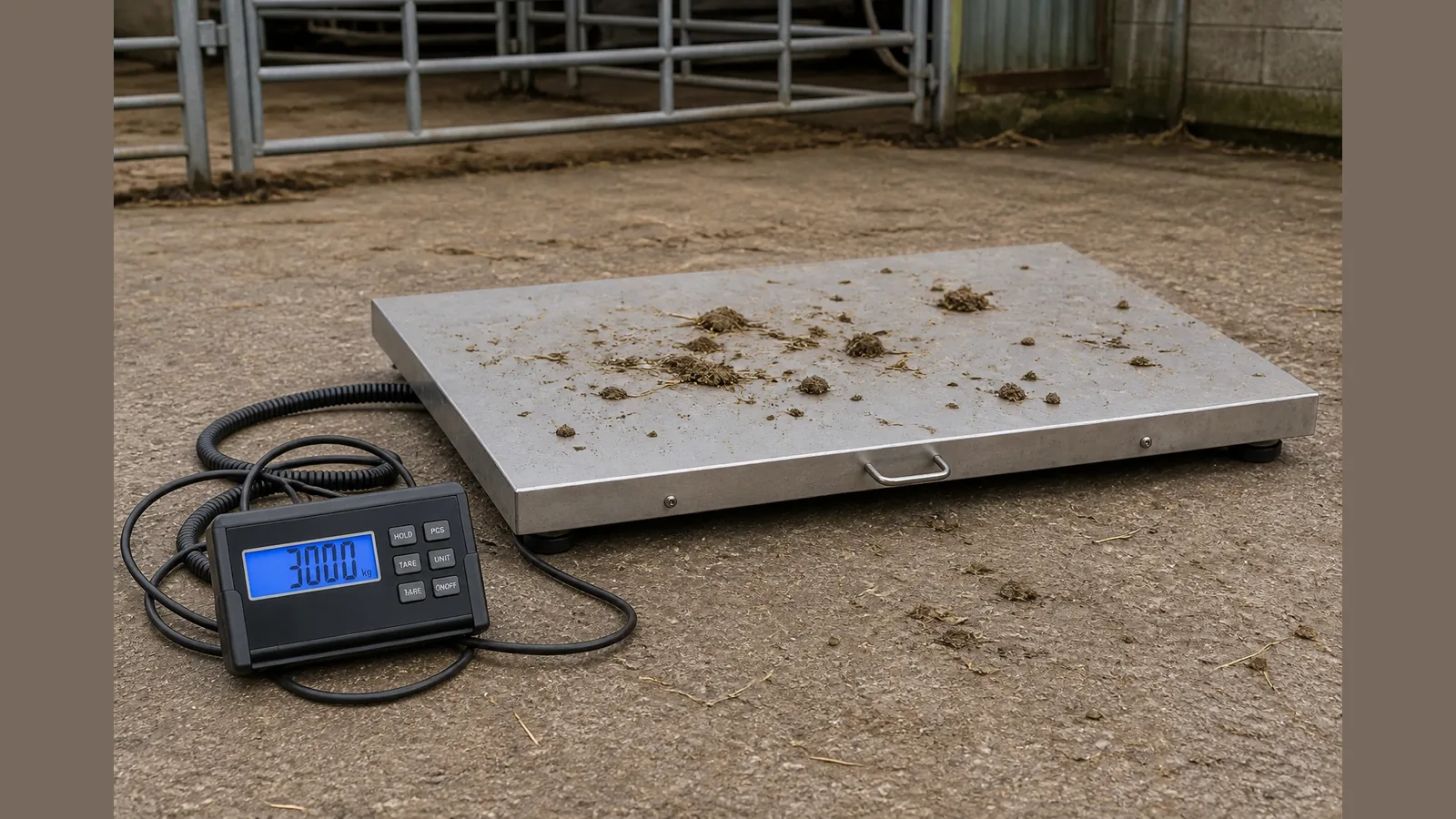
- Place the platform on firm, level ground with clear space around all sides.
- Clear mud, bedding, stones, and ice from under and around the deck.
- Confirm feet sit fully and cables are free of pinches or livestock traffic.
Zero, units, and records
- Zero with nothing on the platform before each session.
- Confirm the display is in the unit you log (avoid mixed unit mistakes on a livestock platform scale).
- Wait for a settled reading; do not write down mid-movement spikes.
- Keep one recording sheet format so kg/lb mix-ups do not enter growth calculations.
Care after use
- Wipe the deck; keep connectors dry; store the indicator away from weather when possible.
- After any move or hard knock, re-check zero and a known check weight routine if you already use one—do not claim new accuracy figures.
Common livestock platform scale faults UK farms see most often are site-related (level, debris, cable damage) rather than mysterious “sensor failure” on day one.
When to get support
Contact the supplier or a competent weighing technician when:
- Zeroing and a clean, level set-up still produce unstable or contradictory readings.
- Hardware damage, moisture ingress, or broken connectors are visible.
- You need formal calibration or service beyond basic on-farm checks.
- You are unsure which platform size and capacity suit your animals—mistakes buying livestock platform scale UK often start with choosing a deck that is too small or underspecified for the heaviest animal you intend to weigh.
Addressing issues promptly supports accurate records, protects animals and operators, and helps the equipment last longer. Do not rely on unverified certification or performance claims when describing the scale.
Next step
If you need a larger farm deck for heavier stock, review the 103 cm 500 kg livestock platform scale details and match platform size and capacity to your animals and yard layout before you buy.
FAQ
What are the most common mistakes using livestock platform scale UK farms make?
Unlevel siting, dirty undersides, skipped zeroing after moves, mixing kg and lb in records, and weighing restless animals before the display settles.
Can I assume a farm platform is legal for trade?
No. Do not assume OIML or legal-for-trade status unless it is explicitly stated for that unit. Many platforms are for management weighing only.
How do I avoid mixed unit mistakes on a livestock platform scale?
Lock the indicator to one unit, label every sheet with that unit, and never convert mid-session without a clear note.
When should I stop and seek support?
If zero will not hold, hardware looks damaged, animals are unsafe on the deck, or readings remain inconsistent after a clean, level set-up and basic checks.